
Structuring a Presentation Story
Unleashing the Power of Visual Storytelling: Our Success Stories.

May 2, 2024
6 min read
%20(1).jpg)
Clear thinking depends on clear sequencing. When ideas are arranged deliberately, comprehension improves, and decisions accelerate. When they are not, even strong insights struggle to land. Presentation structure determines whether an audience follows a line of reasoning or loses it along the way.
Many professionals default to chronological sequencing, describing events in the order they occurred rather than in the order an audience needs to understand them. This logical vs chronological structure mismatch creates friction. Audiences are not interested in timelines. They need a presentation flow that reveals meaning progressively and leads toward a conclusion.
This guide explains how to structure a presentation so each idea builds on the previous one. A strong presentation story framework replaces data-heavy explanations with narratives that work across board discussions, client engagements, and leadership updates. Over time, structuring business ideas becomes intuitive rather than effortful.
Why Structure Matters More Than Content for Comprehension
Ideas alone are not enough to ensure understanding. The structure of the message determines whether a message is understandable or not. Cognitive science shows that people understand information better when information follows a pattern.
When the structure is weak, audiences are required to:
- Hold multiple ideas in working memory
- Infer relationships between points
- Reconstruct meaning as they listen
- Compensate for missing logic
Well-structured communication removes this burden. It allows audiences to:
- Follow predictable patterns effortlessly
- Focus on insight rather than navigation
- Anticipate what is coming next
- Retain key takeaways more naturally
Poor structure is identified by senior management as one of the major sources of frustration. The flow of information in a presentation serves as an invisible pointer. The ability to structure a presentation well becomes a value-adding skill in a world of chronological storytelling.
The contrast is visible at once. Decks that lack structure cause disengagement and confusion. Decks that have strong structure cause attention, better questions, and quicker alignment. The planning of structure in the outline of the presentation is what distinguishes strategic communicators from information conveyors.
See how expert presentation structure, presentation flow, and storytelling frameworks are applied across leadership decks, strategy presentations, and high-stakes business communication.
Logical Flow vs Chronological Flow
Another common error in business communications is the treatment of sequence as logic. This is where the distinction between logical versus chronological structure is very important. Even though the two terms describe the structure of something, only one will enable an understanding.
The order of chronological flow corresponds to the order in which things actually took place. It reflects how the work was accomplished, not how the understanding should have been absorbed. Thus, chronological flow would proceed in such a manner:
“‘We analyzed the data, met with stakeholders, and then tested our assumptions.’” This may well be an accurate representation of the effort being made, but this will seldom be supportive of clarity. Chronology focuses upon process. It tells what has happened, not why this has happened. Whereas logic flow arranges ideas according to how they must be understood by the audience. It foresees answers to questions and responds accordingly. It does not record activity but provides direction.
In a logical structure:
- Context is established before detail
- Insight is presented before supporting data
- Conclusions emerge naturally rather than appearing abruptly
Strong presentation flow is almost always logical rather than chronological. Logical sequencing aligns with how people absorb information, evaluate implications, and make decisions. This is why leaders consistently respond better to structured narratives than to timelines.
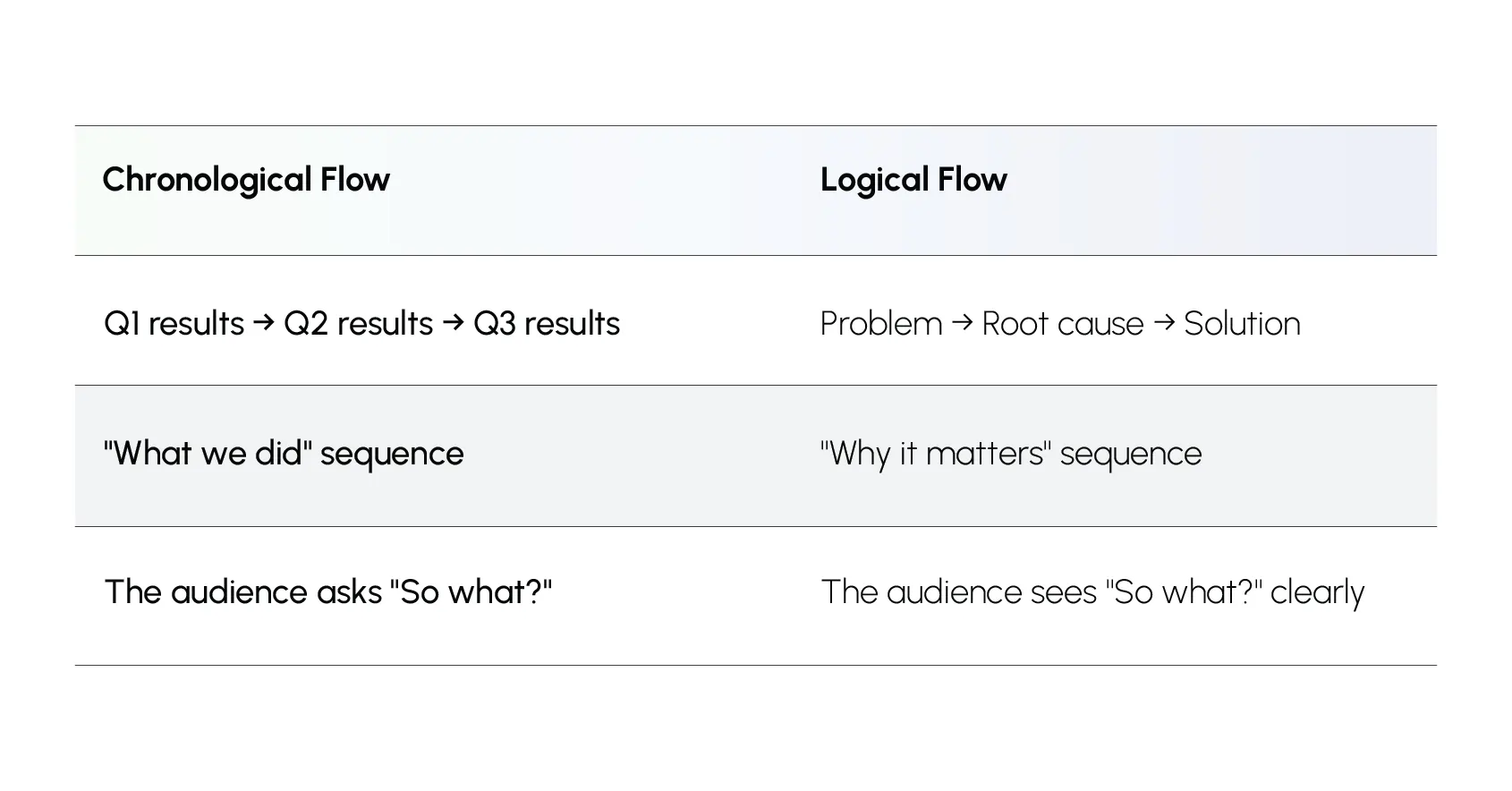
Presentation outline structure planning transforms chronological confusion into logical clarity every time.
The Role of a Presentation Story Framework
A presentation story framework gives structure to thinking, not just slides. It ensures ideas are connected by purpose rather than proximity. Without a framework, presentations drift. With one, they move forward purposefully.
Frameworks are not restrictive. They are clarifying. They help presenters decide:
- What belongs in the presentation
- What should be removed
- What order creates the most impact
Two presentation story frameworks consistently support the strong structuring of business ideas in professional settings.
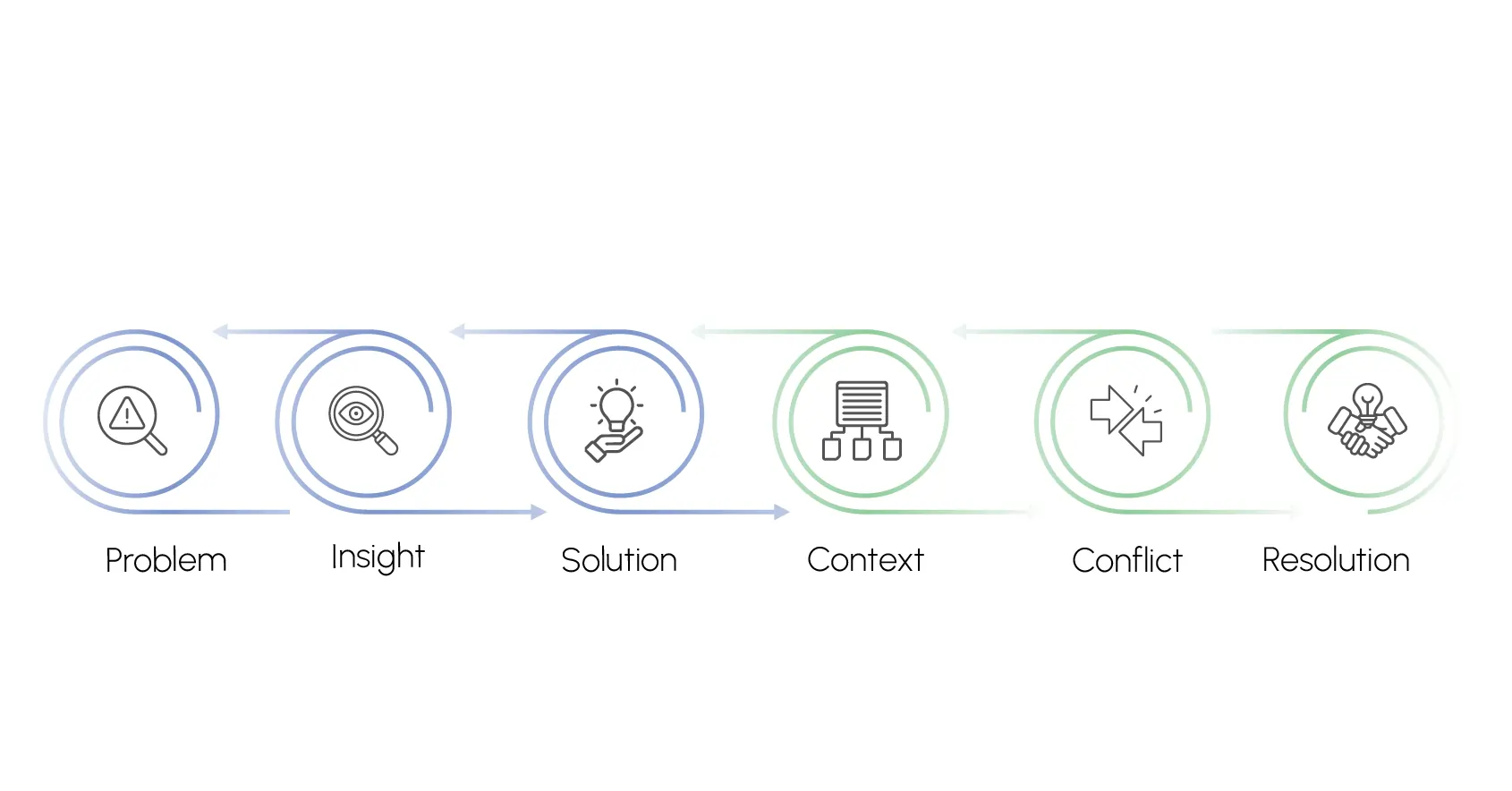
1. From Analysis to Action
This is the most universal form of presentation story structure and is the best one to use for strategy, proposals, and persuasion.
- Problem: You start by defining the issue at stake. This helps in grabbing the attention of the readers.
- Insight: This is where you state the most important findings, reasons, or discoveries that underlie your insight. This shows strength, understanding, and insight.
- Solution: You provide the recommendation, decision, or direction based on the insights.
This flow directly enhances structuring ideas for business by reflecting how audiences think:
What is happening, anyway? Why is it happening? And what should we do next, anyway?
2. From Situation to Solution
This template is useful for alignment, storytelling, and presentations where emotional power is desired.
- Context: You start by establishing a background for the audience so that they can relate to the environment.
- Conflict: The tension, challenges, or complications that necessitate a change are brought to the surface.
- Resolution: You state the final step, decision, or plan that leads to a resolution of the conflict.
This model is most effective in leadership communication, strategy unveiling, and breaking news. It ensures a smooth flow of information delivery to build a strong message. Analyze examples of how the Presentation Story Framework can be used to structure business ideas.
Explore case studies showing how a clear presentation story framework helps structure business ideas and align stakeholders around complex decisions.
How Structure Shapes Slide Flow (A Practical Perspective)
Good presentations are not designed on PowerPoint. Good presentations are designed in the thinking style of the presenter. Before any slides are made, a good presenter could easily outline the structure of a presentation orally, without using any visuals.
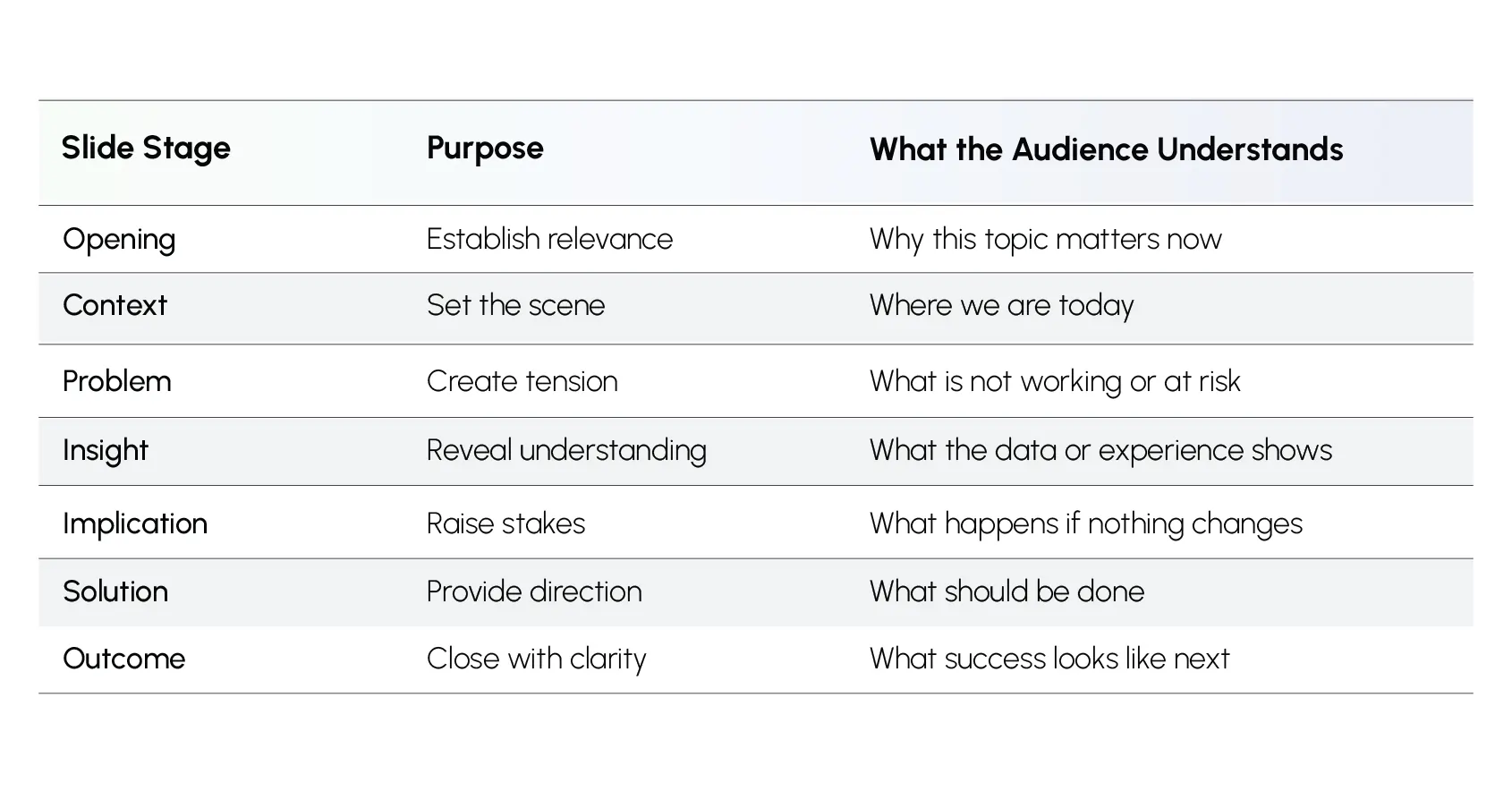
This is an effective order of presentation. Each part leads the audience into what follows. Nothing is hurried, illogical, or too much.
Notice what is being avoided: the long histories, the over-explained background, and the unrelated slides that are there only because the data existed. This is the benefit of understanding how to organize the presentation prior to design. Slides cease being containers for data and begin being visual reminders of logic.
When the structure is clear, the process of creating slides speeds up. Inclusion and exclusion decisions become clear. Each slide needs to earn its keep by contributing to the story.
What This Mastery Enables You to Do
Once you understand and apply structured storytelling, you gain the ability to:
- Choose logical sequencing over chronological narration instinctively
- Apply a clear presentation story framework before opening PowerPoint
- Build a seamless presentation flow that feels effortless to follow
- Outline presentations confidently using a strong presentation outline structure
- Translate complex thinking into clear, structured business narratives
Most importantly, this mindset change completely alters how you deliver presentations. You begin thinking not in slides, but in stories. It is this mindset change that distinguishes tactical presenters, who merely share information, from strategic communicators, who move people towards understanding, alignment, and decision-making.
Presentation Structure Check (Before You Open PowerPoint)
Before creating slides, test your presentation structure:
- Does your presentation story framework match your objective?
- Can you explain the presentation flow in 30 seconds?
- Does each section answer "So what?"
- Is the logical vs chronological structure clearly logical?
- Does it fit 5-7 slides maximum?
Any "No" requires immediate refinement.
What You Should Understand After This Section
The ability to master the structuring of presentations will enable you to automatically select the correct framework for presenting your story in any given circumstance, and logical vs. chronological structuring will no longer pose difficulties in being automatically comprehended by your audience. Your structuring of business ideas will now come instinctively.
Most notably, you will prepare full presentations in your mind before PowerPoint opens, which will save hours with a disproportionate amount of impact by using a disciplined presentation structure to distill difficult analysis into actionable stories that executives will actually remember and take action upon.
%20(1).jpg)