
Storytelling for Business Presentations
Unleashing the Power of Visual Storytelling: Our Success Stories.

May 2, 2024
5 min read
%20(1).jpg)
In business settings, storytelling is often misunderstood. Stories are 22 times more memorable than facts alone. Many professionals assume that presentation storytelling means adding emotion, drama, or theatrics to serious content. As a result, they either overdo it or avoid it completely.
Both approaches weaken communication.
In reality, storytelling in business presentations exists for one reason only: to make complex ideas easier to understand, remember, and act upon. It is not about entertainment. It is not about performance. It is about structure, logic, and meaning.
When used correctly, storytelling through presentation helps audiences follow reasoning without mental strain. When used incorrectly, it damages credibility and distracts from decisions. This topic exists to show the difference and to help you apply storytelling as a strategic tool, not a stylistic one.
At its core, storytelling is a business presentation strategy. It supports clarity, reinforces logic, and improves engagement without sacrificing seriousness. The goal is not to sound inspiring. The goal is to be understood.
Understanding the Difference Between Data Storytelling and Emotional Storytelling
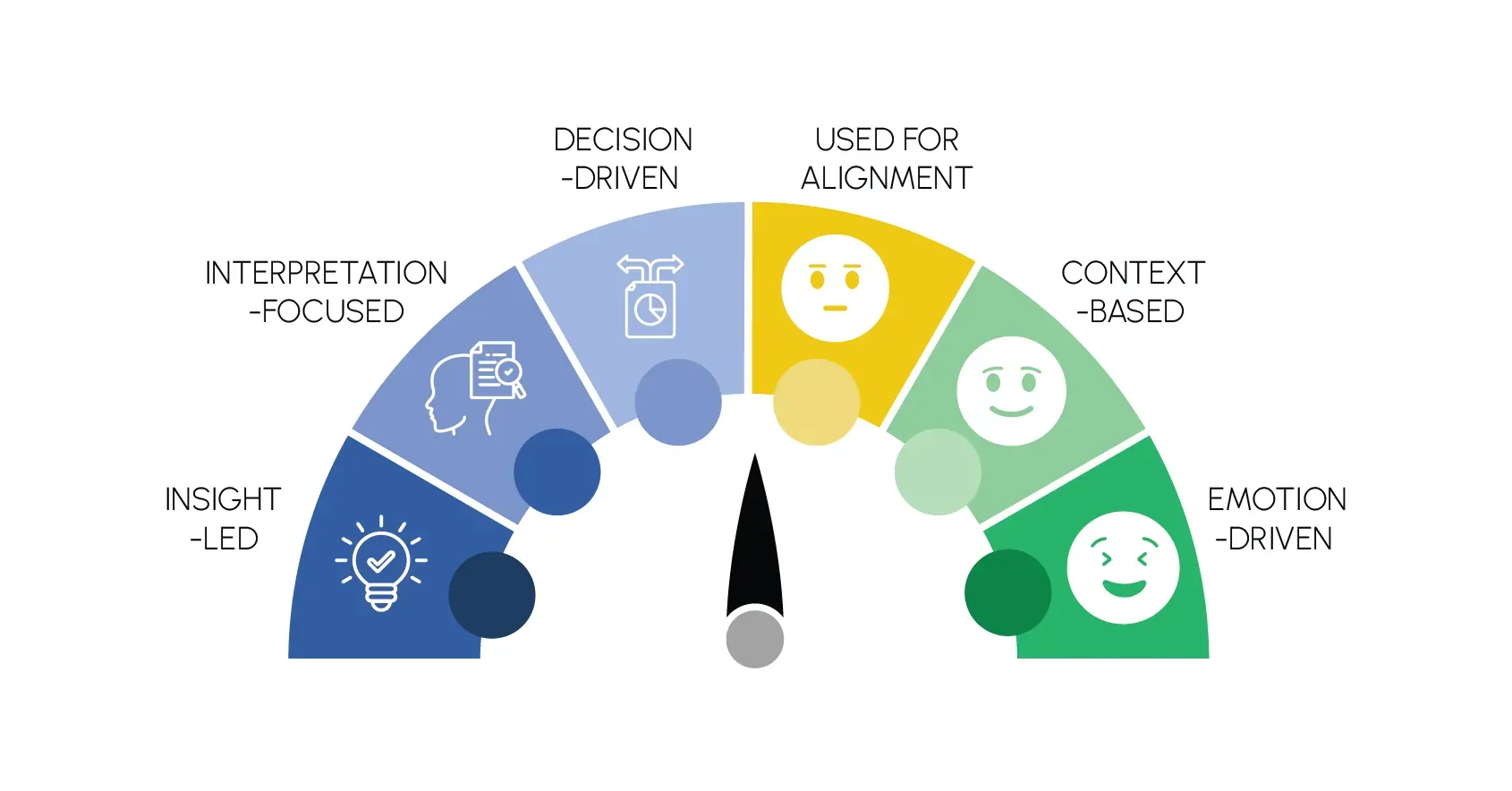
The most fundamental classification of presentation storytelling is between data storytelling and emotional storytelling. The confusion between these two categories of storytelling accounts for most of the mistakes committed while storytelling in the corporate world.
Data Storytelling
Data storytelling focuses on explaining what the data means, not simply showing it. 92% of business leaders believe data storytelling effectively presents insights. It answers questions like:
- What pattern matters here?
- Why does this trend exist?
- What implication does this insight create?
In data storytelling, numbers are not the story. The interpretation is. The narrative helps the audience move from observation to understanding to implication.
This form of storytelling presentation is especially effective in:
- Business reviews
- Strategy discussions
- Performance updates
- Decision-driven presentations
It strengthens credibility because it shows analytical thinking rather than emotional persuasion.
Emotional Storytelling
Emotional storytelling is centered on emotions, tension, and impact. Such storytelling is often based on people, events, or turning points.
However, storytelling that evokes strong emotions in business presentations has to be handled carefully. It proves to be most effective if:
- Aligning teams during change
- Communicating vision
- Reinforcing culture or values
- Framing transformation initiatives
The problem arises when the emotional story is used as a replacement for logic rather than an addition. When there is an overabundance of emotional storytelling in data or decision-making contexts, the emotional story can come across as manipulative or even irrelevant. This is where the decision between narrative and data visualization becomes important. Business audiences need the message first and the emotional story second.
When Storytelling Is Useful and When It Isn’t
However, not every presentation has a need for storytelling, nor does every point in a presentation have a need to be told as a story. It’s just as crucial to know when to use a story as it is to know how.
Storytelling Is Useful When:
- You need to explain the complexity
- The audience lacks shared context
- Data patterns are not self-evident
- You want to guide interpretation, not just show information
- Alignment or understanding matters more than speed
In these cases, storytelling in business presentations acts as a cognitive bridge. It helps audiences connect dots without guessing.
Storytelling Is Not Useful When:
- The decision is obvious
- The audience already agrees
- The content is purely procedural
- Time is extremely limited
- Over-explanation creates friction
In such a context, storytelling is not as effective as direct speaking. The most common mistake in storytelling in the business world is to tell a story in a situation where the message is already clear. Effective communicators understand how to let someone else have their say.
If you’re unsure whether your presentations rely too much on narrative or too much on data, it’s often a structural issue, not a content one. Reviewing how your insights are framed can immediately improve clarity and decision alignment.
Turning Data Into Narrative (Without Losing Precision)
Few professionals are comfortable with storytelling. They believe storytelling is an art that needs creativity. The truth is that storytelling is an exercise in discipline. Storytelling is the art of taking information and presenting it in a structured manner to allow the audience to answer:
- What changed?
- Why did it change?
- Why does it matter?
- What should happen next?
This isn’t fiction's structured reasoning.
One way to think more practically is to consider not your graphs, but your question. Every data point needs to lead to a statement. Here are a few examples:
- Instead of saying, “Here are the quarterly numbers,”
- Ask, “What explains this quarter’s performance shift?”
Good data storytelling never exaggerates. It carefully:
- Selects only the data that supports your insight
- Sequences findings logically, not just chronologically
- Explains implications clearly, not emotionally
The result is a narrative that is credible, clear, and guides your audience without theatrical persuasion.
Finding the Right Balance Between Narrative vs Data Presentation
A common mistake is treating narrative and data presentation as opposites. In an effective storytelling presentation, they are complementary.
Narrative provides direction. Data provides proof.
Too much narrative without data feels vague. Too much data without a narrative feels overwhelming. The balance depends on:
- Audience seniority
- Familiarity with the topic
- Stakes of the decision
In senior leadership settings, narrative often comes first to frame thinking, followed by data to validate it. In technical or expert audiences, data may lead, with narrative used to synthesize meaning.
Understanding this balance is a core business presentation strategy. It allows presenters to adjust without abandoning structure.
Avoiding Over-Dramatization: Protecting Credibility
Over-dramatization is one of the fastest ways to lose trust. Common pitfalls:
- Artificial tension
- Overstated risks
- Unsupported emotional language
- Theatrical story arcs
Practical alternatives:
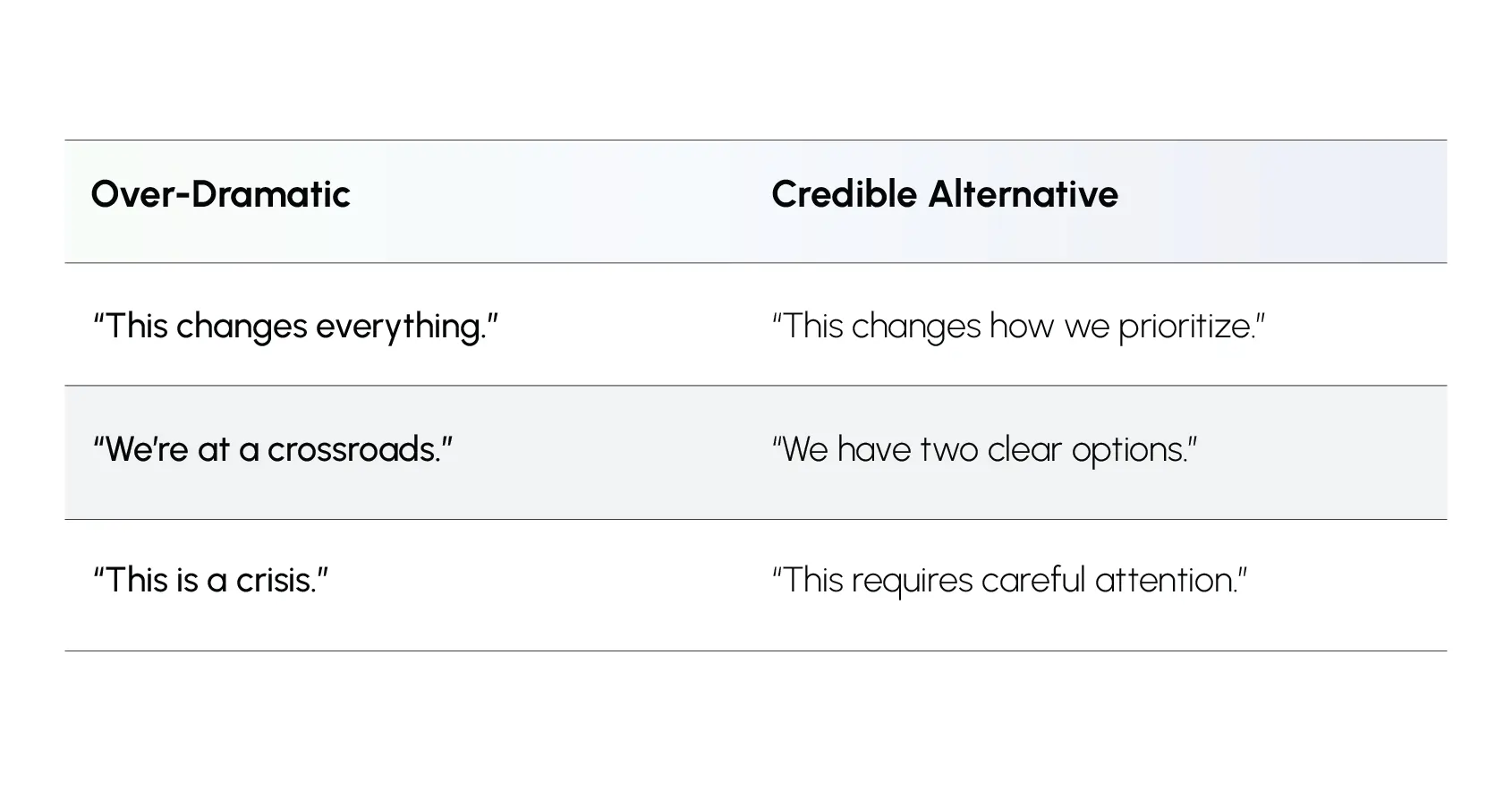
Guiding principle: Subtlety signals confidence; overstatement signals insecurity. Storytelling should serve clarity, not drama.
Additional tip: Review your draft slides or script for any unnecessary adjectives, exclamation points, or metaphors they often indicate drama rather than clarity.
Storytelling as a Strategic Skill, Not a Style Choice
The strongest storytelling through presentation is almost invisible. The audience doesn’t think, “That was a good story.” They think, “That made sense.”
This is the key to successful storytelling in a business presentation. It enhances understanding without calling attention to itself. It does so when it:
- Presentation flow feels natural
- Insights feel inevitable
- Decisions feel informed
- Engagement increases without effort
This is why storytelling presentation skills are not creativity enhancers. Storytelling presentation skills are communication skills that improve outcomes.
What This Enables You to Do
After mastering this topic, readers should be able to:
- Use presentation storytelling to clarify complex ideas, not embellish them
- Distinguish confidently between data storytelling and emotional storytelling
- Decide when to use storytelling and when it adds no value
- Turn data into a narrative without sacrificing precision or credibility
- Avoid common storytelling mistakes in business settings
- Integrate storytelling naturally into a broader business presentation strategy
Most importantly, they no longer view storytelling as performance and instead begin to use storytelling as thinking, which is visible. This changes the way they present their information from mere transmission to understanding, which is the key to decision-making.
If you are looking for presentations that are well-structured and decision-ready, and also visually engaging and well-designed, perhaps we could team up for your next major communication.
%20(1).jpg)