How Emotional Intelligence Helps a Presentation Design Agency Build Stronger Teams
How Emotional Intelligence Helps a Presentation Design Agency Build Stronger Teams
Presentation Design
Aayush Jain
April 14, 2026
14 min. Read
Aayush Jain
Presentation Design
April 14, 2026
14 min. Read
TL;DR 🕒
Presentation design agencies can benefit from emotional intelligence as well, since it enables individuals to listen more effectively, collaborate, and perform under stress better. Emotional intelligence can assist a team in interpreting presentation briefs correctly, handling criticism rationally, and maintaining high-quality performance during short deadlines. This can help a presentation agency earn client trust and deliver better results to the latter.
Most people choose a presentation design agency based on visuals, hierarchy, and the ability to create compelling slides out of complicated content. Well, these are precisely the areas in which such top companies as Ink PPT excel. Apart from creating beautiful presentations, they develop narrative structures for leading teams and communicating the message effectively.
However, the top presentation design companies are not only skilled but emotionally intelligent. Emotional intelligence or being able to manage emotions becomes a critical skill for teams working intensively, under pressure, and dealing with client expectations.
When applying EI in creative teams, you will see improvements in trust within a team, enhanced collaboration, and more strategic presentation design work even under high pressure.
Why Emotional Intelligence Matters in a Presentation Agency
Emotional intelligence helps presentation design teams cope better with ambiguous briefs, provide proper feedback, ensure smooth handoffs, and handle stressful deadlines."It is less about personality and more about execution quality, especially when multiple stakeholders, tight deadlines, and high-profile decks are involved."
The 5 EI skills and how they show up in presentation agency work:
EI Skill
What It Looks Like in a Presentation Agency
What Goes Wrong Without It
Self-Awareness
Designer separates personal taste from the client's brief
Creative direction drifts; the client receives what the designer wanted, not what was needed
Self-Regulation
Team stays composed when a 100-slide deck changes overnight
Reactive decisions, visible quality drop at the finish line
Empathy
A strategist reads between the lines of a vague brief
Repeated revisions; client feels unheard
Social Skills
Design, content, and production align without friction
Handoffs break down; blame replaces collaboration
Motivation
Team invests discretionary effort in the hardest projects
Minimum viable output instead of the best possible work
The 5 Ways EI Builds Stronger Teams in a Presentation Agency
1. Improving Brief Understanding Through Better Listening
It is rare when a client provides a detailed brief. Instead, they usually describe how the presentation should look and leave hidden behind the main requirement, which lies in the business context. Emotional intelligence helps recognize that gap and get a more accurate brief.
Scenario: A leadership team needs "more premium" presentation, whereas the actual requirement is to improve confidence before discussing a specific topic with a board.
2. Protecting Deck Quality Under Deadline Pressure
Stressed-out teams are more prone to making mistakes and failing to preserve the quality of work. When the timeline becomes tight, emotionally intelligent teams stay composed and communicative, protecting the quality even during emergency changes.
Scenario: CEO keynote of a consulting firm is rearranged the day before an event and the agency manages to adapt to the change quickly and efficiently.
3. Turning Confusing Feedback Into Clear Direction
Presentation feedback is often emotional and contradictory. For instance, one stakeholder suggests making the presentation more confident, another wants to make it more concise, while the third one asks for more details. However, when the presentation design team has enough EI skills, they are ready for this challenge.
Scenario: During development of the presentation for a large enterprise, the sales presentation receives feedback from marketing, product, and leadership teams simultaneously.
4. Creating Team Safety to Catch Presentation Risks Early
Presentation design teams perform much better if they can catch potential risks in advance and discuss them openly. The atmosphere of mutual trust created due to emotional intelligence allows each team member (designer, strategist, and producer) to express their opinion freely.
Scenario: Developing an investor presentation, a junior team member finds a contradiction between the story and numbers.
5. Building Client Trust in High-Pressure Delivery Moments
A presentation design team will be remembered not only for great slides but also for how it handles feedback, tight deadlines, and unexpected emergencies. During such challenging moments, emotionally intelligent teams demonstrate consistent high performance under pressure.
Clients don’t judge teams by smooth delivery. They judge them by stability when everything changes.
Scenario: Annual leadership event presentation gets several urgent revisions right before a big event. Despite all the changes, the client is confident that everything will go fine.
How INK PPT Builds Emotional Intelligence Into the Way We Work
At INK PPT, emotional intelligence is not a training module. It is a core part of how we build projects, manage clients, and develop our teams.
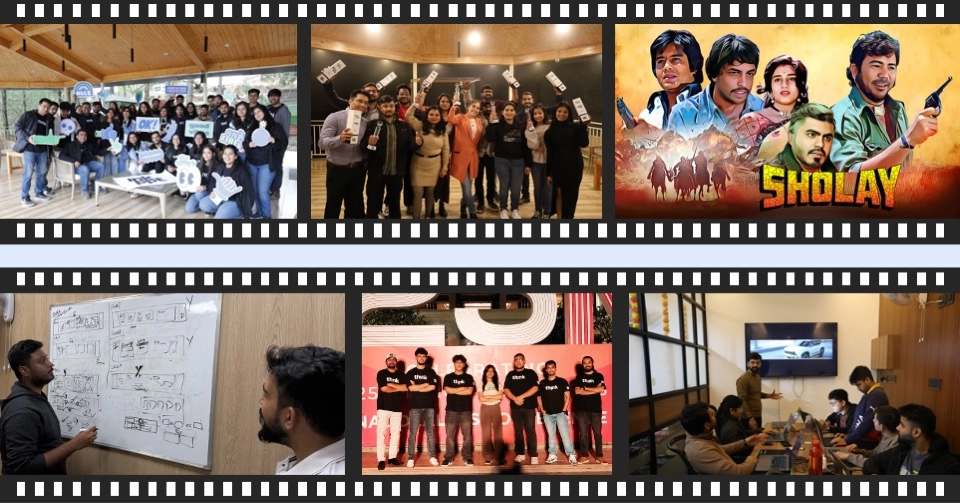
Event training. Before each major event, we conduct structured preparations that go beyond the usual. We train on the fly changes to briefs, on-the-spot communications with the client, and composure when unexpected events happen. We set up our ability to work effectively under pressure before the pressure even arrives.
Demo days. Demo days involve having our team members demonstrate their work internally to everyone else. Not for getting approvals but to be visible to everyone in the team. This is great practice for surfacing blind spots, for developing the habit of articulating the thought process behind design decisions, and to show other perspectives to everyone involved. Self-awareness happens when being observed.
Open communication. No one is on the list for bringing up problems. Each member of our team can point out problems right away as soon as they occur, whether this involves a project, a brief, or just a communication problem. Solving small problems in the beginning prevents us from making the same mistakes and building on them later.
Cross-functional perspective. Our designers are supposed to understand the constraints on storyboarding that our strategist has. On the other hand, our strategists are supposed to know the boundaries on what visuals can convey. This principle is applied systematically in all our processes throughout the entire chain of work.
Design awards. We use a special system of awarding top works done by our designers internally. These are not merely formalities. They establish a certain standard that is required regardless of whether the client or the designer finds the project exciting. High-EI teams care about quality even if there is no audience around.
This is not a set of isolated initiatives. This is the framework that helps us complete as many as 250 slides in as many as 14 different presentations in just 2 weeks for JSW MG Motor India. This is the architecture that enables us to change the format of an overnight CEO keynote for Deloitte in such a way that no one would notice the pressure. The EI is not apparent in the resulting deck. It is everything in how the process takes place.
And the best presentations are always the result of teamwork where the team had listened and communicated well enough while also keeping the standard of excellence at the time of maximum pressure.
Where Presentation Agencies Get This Wrong
Presentation agencies invest a lot into building the design capabilities of their teams. Fewer of them think about helping their employees develop the EI that enables the quality of their presentation work. Here are some warning signs that show the lack of EI in a presentation agency:
Client silence interpreted as approval. When a client goes silent following a review of a design, most agencies automatically interpret this as an approval. In reality, it means quite the opposite. The client is unable to pinpoint where things went wrong, so they wait until the very last minute to give a critique because they cannot afford to fix the issues afterwards. This is where the EI skills come in.
Defending decisions rather than listening. Most agencies make the mistake of trying to convince clients why their choices were correct after receiving criticism. However, this kind of response means that the client was trying to point out problems and was ignored instead. Low-EI agencies engage in debates. High-EI agencies turn these interactions into briefs.
Focusing on portfolios, not audiences. This is perhaps the biggest self-awareness failure in presentation work. The most important thing about any deck designed by a PPT Design Company is whether the content will actually work in front of the audience. Losing sight of that goal is the biggest EI mistake a presentation agency can make.
Inconsistency under tight deadlines. Another sign of poor self-regulation is allowing inconsistency into designs created under a tight schedule. Even though the slides that may suffer quality-wise are unimportant for the brief, the audience will see them as well and will notice that the slide doesn't belong. Inconsistent presentations reveal that the team lost control.
Process substituted for presence. Following procedures is not EI in action, and agencies often confuse the two. Conducting a briefing, filling out a feedback form, and conducting a review are actions. High-EI teams use these actions as opportunities to communicate more effectively and listen better to their clients.
How Emotional Intelligence Improves the Presentation Itself
There is an obvious link between the degree of emotional intelligence in teams and the quality of the final product, which is even more important in terms of critical projects. In the context of a presentation design agency, emotionally intelligent teams will perform better since they will include elements such as empathy, regulation, and ownership during all the stages of production:
A self-managed team is consistent despite stress, resulting in improved visual design and narrative clarity despite limited time.
Motivated individuals put in the additional 10% effort, which involves the subtle touches that take a presentation from average to outstanding.
Excellent interpersonal abilities when providing on-site assistance will ensure that any problems can be fixed in an orderly manner without creating unnecessary turmoil.
Empathy-driven briefings enable designers to rise above subjective tastes and align their work with the actual intent of the client.
For example, INK PPT managed to produce a CEO Keynote of the SAPM of Deloitte, including 17K resolution, multi-screen content within 5 days only due to emotional intelligence. While a great slide design was its main result, the hidden background of the successful completion of the work could be described as effective communication, efficient collaboration, and the ability to stay emotionally balanced under extreme pressure.
Get ready to see how we can help you create your next great presentation! Join forces with us and create not just slides, but an effective and emotionally resonant message!
The best presentation design agencies don't win because they have the best software or the largest slide libraries. They win because they've built teams that understand people, the clients they serve, the colleagues they work alongside, and themselves.
Emotional intelligence in the workplace isn't a leadership trend or an HR programme. For a presentation design agency, it is the invisible architecture behind every great piece of work. It shapes how a brief is heard, how a design is refined, how a client relationship grows, and how a team performs when the pressure is highest.
At INK PPT, we believe that team collaboration built on emotional intelligence is what separates presentations that merely communicate from presentations that genuinely connect.
“ Build Emotionally Strong Teams ”
If you're ready to work with a team that brings both strategic design thinking and genuine human understanding to every project, we'd love to hear from you.
In what ways does emotional intelligence increase the accuracy of the interpretation of the presentation brief?
Since emotional intelligence enables one to listen beyond words, it allows individuals to determine the true intentions of clients and prevent misinterpretations in advance.
What may be a potential red flag about the client who stays silent regarding the feedback on a presentation design project?
Silence on the part of the client means that they have some difficulties with providing feedback or even with expressing their ideas. An emotionally intelligent team will notice this problem promptly and will address it immediately.
How do presentation design agencies interpret contradictory feedback from different stakeholders?
The members of emotionally intelligent teams perceive contradictory feedback not as a disagreement but rather as various layers of intentionality. Thus, they can listen to their clients attentively, find common points between conflicting viewpoints, and come up with one coherent direction for a presentation.
What impact does self-regulation have on the process of revising the presentation at the last moment?
This skill allows individuals to keep their calm and work productively no matter what happens, including such stressful situations as revisions. This is why self-regulation is crucial during revisions because it allows maintaining the quality of work.
How Emotional Intelligence Helps a Presentation Design Agency Build Stronger Teams
As a passionate explorer, I see crafting the perfect story as embarking on a refreshing Himalayan journey. Every narrative is an adventure, a voyage of imagination, meticulously molded into captivating presentations. I'm here to guide you, ensuring your story becomes an unforgettable odyssey, with each creation as a vibrant landscape ready to captivate eager audiences.


.webp)