


Contact Us
Let’s Partner for Your Next Big Presentation
Consult with our Business Advisor
.webp)


Losing an enterprise deal despite a great demo is definitely among the worst experiences in B2B sales. Your product is great. The pricing is right. The deal just goes silent.
Most of the time, this is caused by the lack of substance in the presentation not due to its poor design or aesthetics, but because it is not structured for enterprise sales. This is where generic decks diverge from the Strategic Corporate Presentations for IT & SaaS.
Based on our experience in creating corporate presentations for enterprises in the IT and SaaS sectors in the last 12 months, there is one element that causes problems more frequently than others. Namely, starting off with the vendor's story rather than presenting the problem faced by the buyer. No matter whether you missed the ROI slides, no matter whether the presentation looked great or not, it is one single element that can derail your deal more than anything else.
The mistake is easy to make. After all, you are very familiar with your offering and, therefore, start off with the vendor's story, while the CFO is busy with the impending compliance deadline, the IT Director still remembers the previous migration failure, and the VP of Operations calculates the potential cost of the disruption. Six different people with six different concerns in one room. And the final decision was made by all of them.
This is what a good strategy should cover for you to make a presentation that stands on its own, even when you leave the room. These are some of the best practices IT and SaaS firms follow when it comes to crafting their corporate presentations.
The essential premise of an enterprise sale is simple and clear-cut. The enterprise will look at your services or product offering as a solution to its problem. Pricing and features are only secondary criteria here. The primary criterion is confidence, and your presentation either creates it or fails. Period.
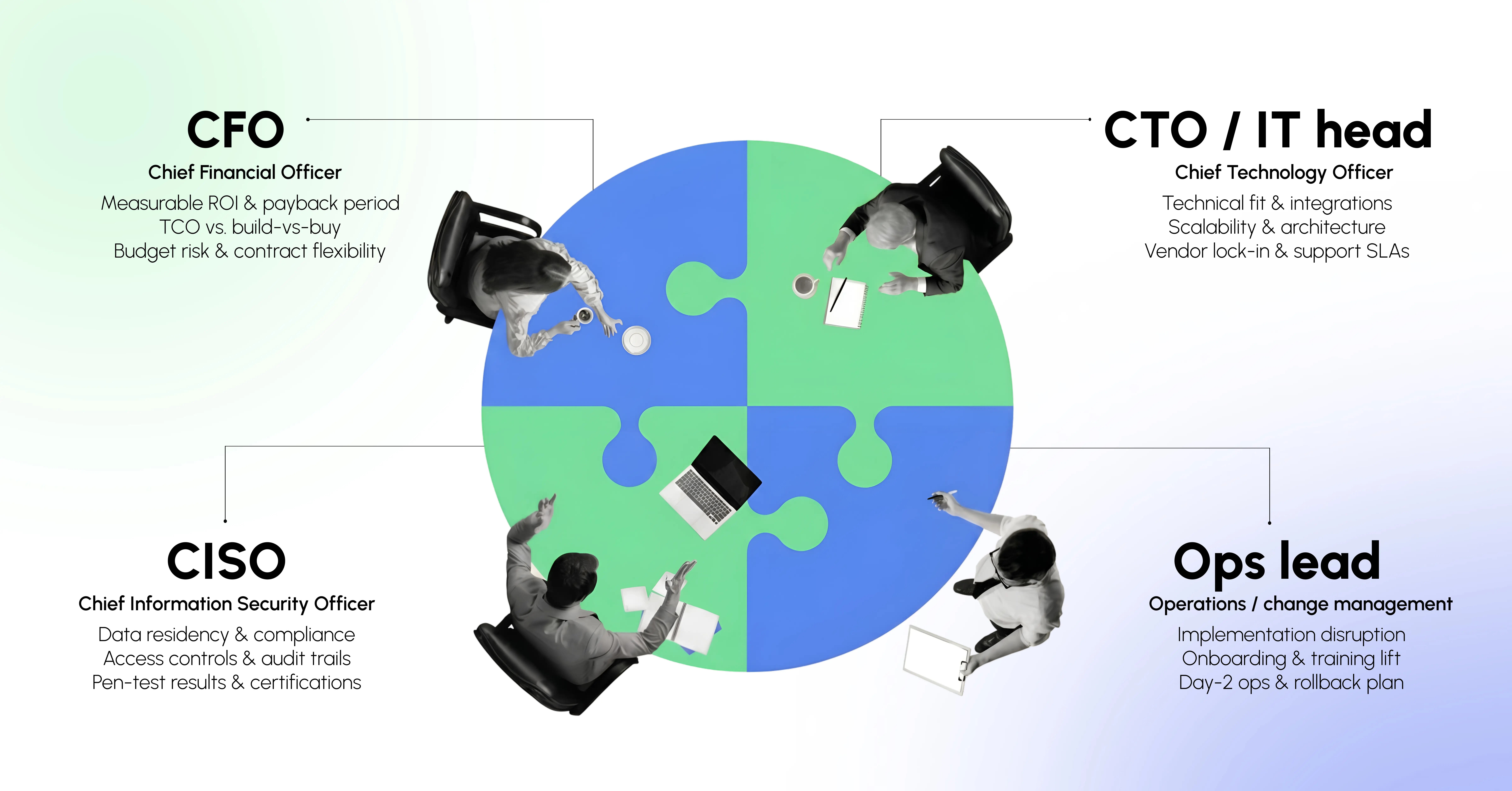
What's more important, an enterprise does not consist of one individual. It is usually a buying committee consisting of several people: IT Head assessing technical suitability, CFO evaluating the ROI, the CISO considering the security issues, and the Operations lead estimating the level of disruptions. Again, different concerns.
The core truth: Most enterprise deals do not fail due to the product failing the evaluation stage. They fall through because the presentation cannot support a case that all buyers would agree on. One stakeholder, one concern, one weak slide. Enough to torpedo any deal.
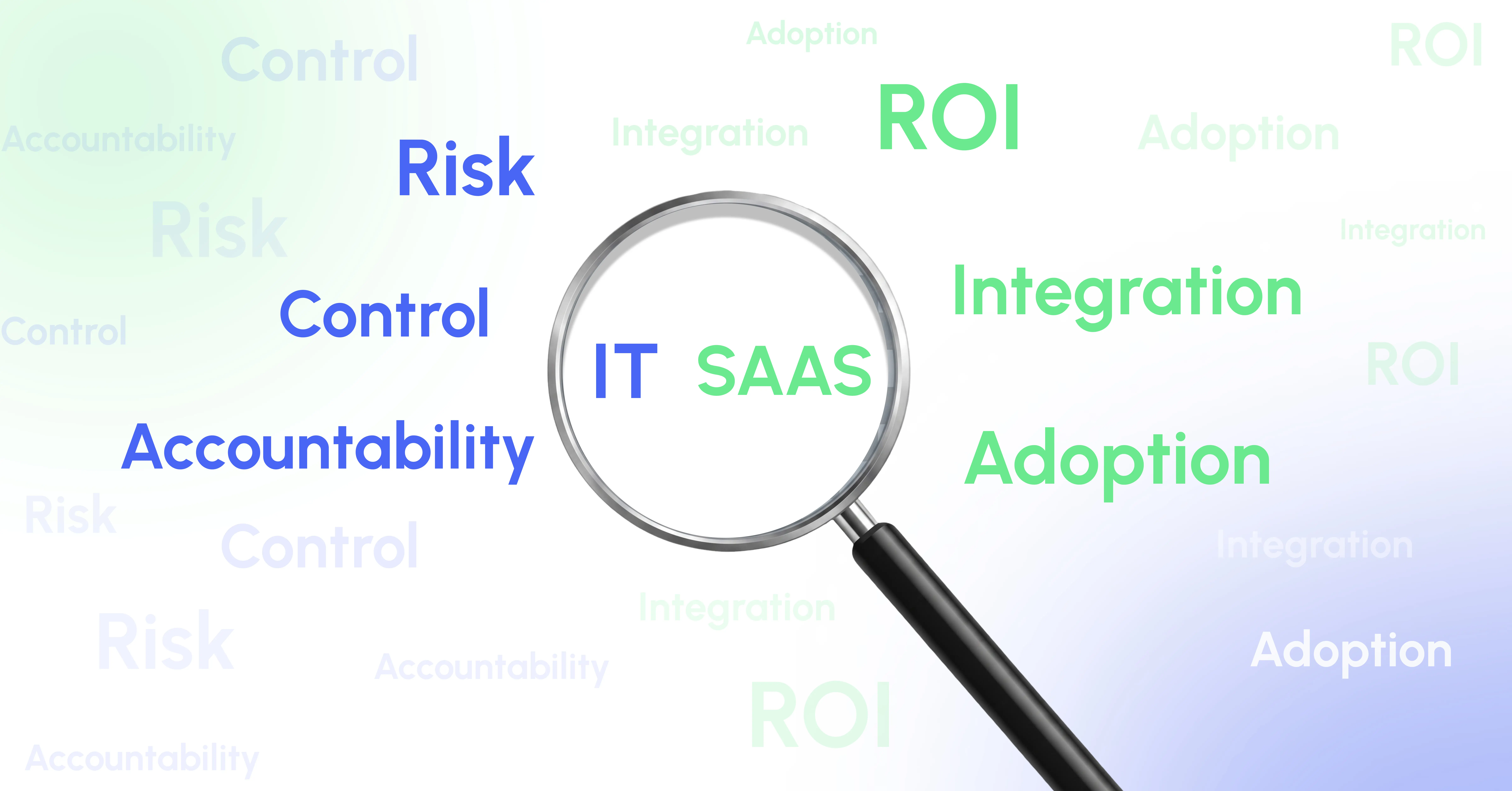
IT companies and SaaS companies both sell to enterprises, but they face structurally different buying conversations. Using a single approach, even a well-designed modern SaaS deck for both, is a mistake that costs real deals.
An enterprise will be working with a potential vendor for its managed service, cloud infrastructure, cybersecurity, or transformation project. Hence, operational risks will always be a top concern. The company will have to delegate certain operations and processes to this vendor and trust them with running its systems.
At this point, capability is never an issue. The accountability is. And all evaluators will ask themselves these questions during the presentation:
IT company presentations that highlight its certifications and services without mentioning any risks first are already doomed. Security ranks #1 in 32% of enterprise risks. So, an IT company presentation needs to demonstrate an understanding of responsibility before anything else.
Enterprise customers usually do not doubt the functionality and usability of your application or platform. What they have doubts about is its ability to integrate into existing enterprise processes and run successfully after that. As a result, most of the problems are never about the software itself.
Most SaaS enterprise clients will ask themselves these questions during a presentation:
A SaaS deck that spends most of its slides on feature walkthroughs, with nothing on adoption, integration, or long-term value, as it leaves the most important buying objections completely unanswered, something a strong SaaS presentation PPT is designed to address. Poor adoption dooms 90% of SaaS efforts to underperformance. That's not a design problem. It's a strategic gap in how the business case is being made.

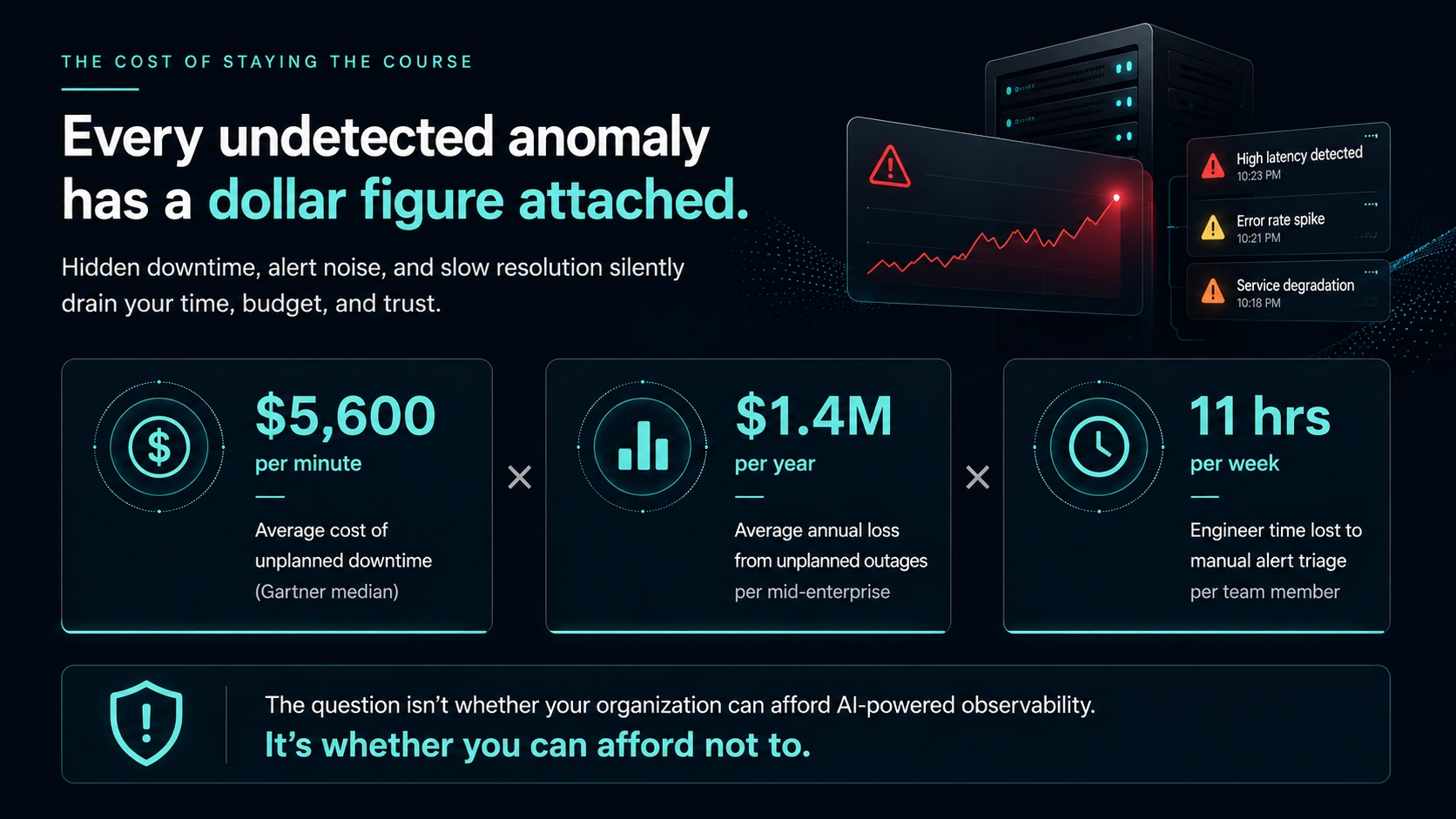

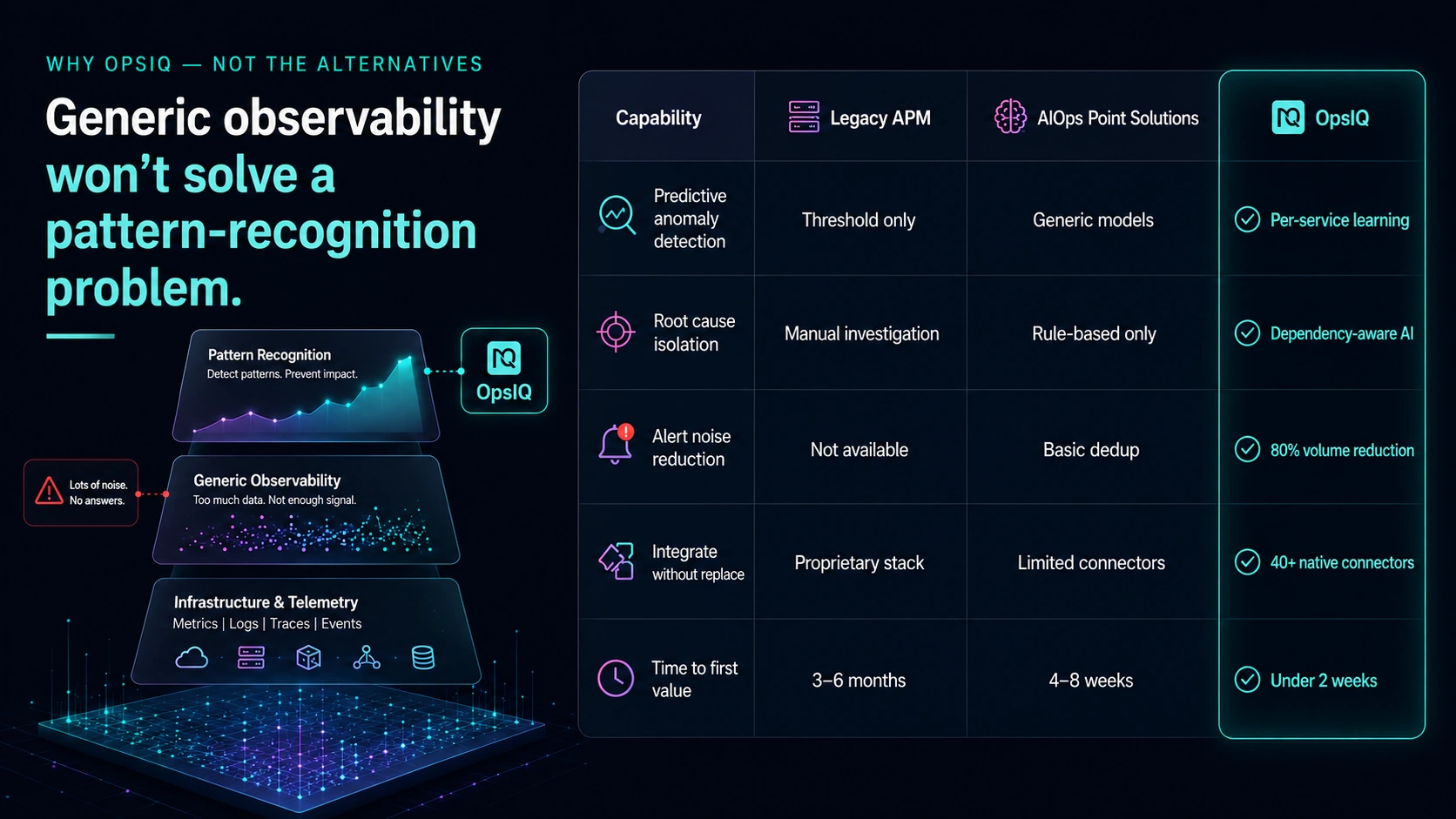
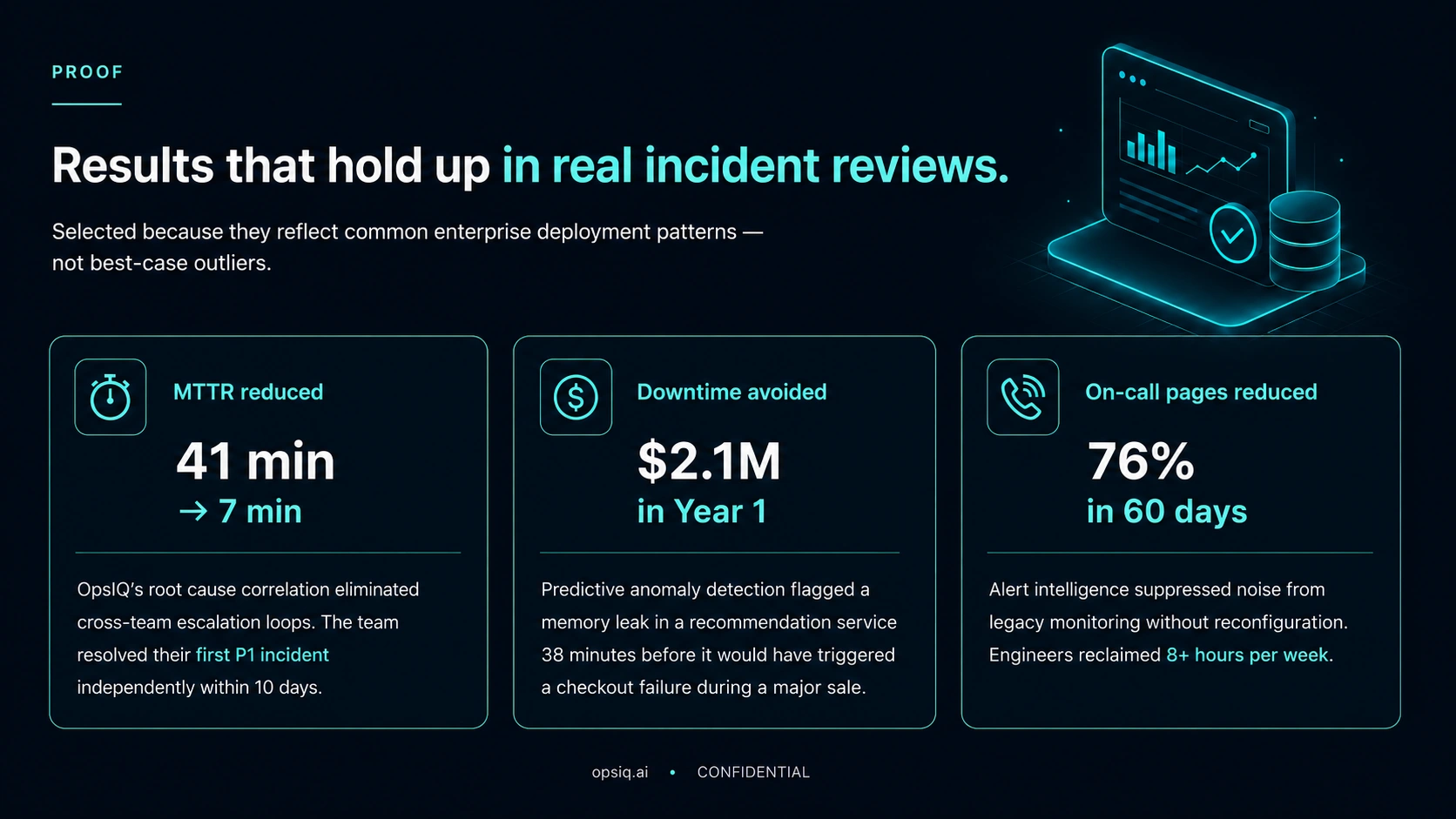
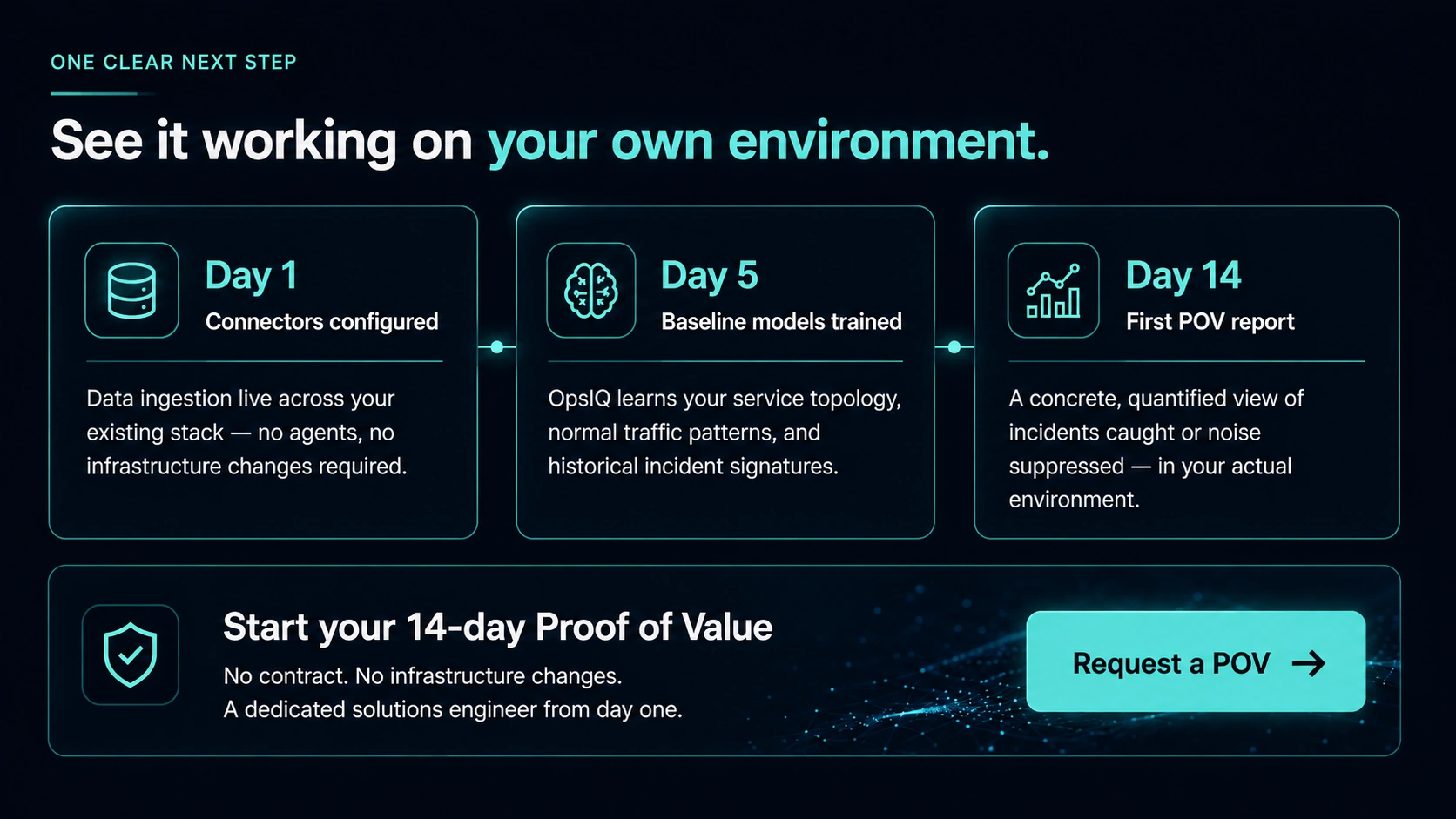
Strategic seems to be one of the most abused terms used in the field of presentations. Many people think about it as an elegant way to present content. Wrong again! A strategic presentation implies that each slide does something: makes the case for your business, defuses the counter-argument, and moves decisions forward. Each slide that fails to accomplish one of these things does not belong.
Here is what that structure looks like for an enterprise IT or SaaS pitch:
Start by framing the problem that you solve with your approach. Explain that you understand their business challenges and the industry context first. Explain how the particularities of your approach make your product the right choice to address their specific challenge. Be sure to address the potential risk factor because they don't necessarily voice all of the questions they would like to be answered. They are the following: security, compliance, implementation risk, and vendor lock-in.
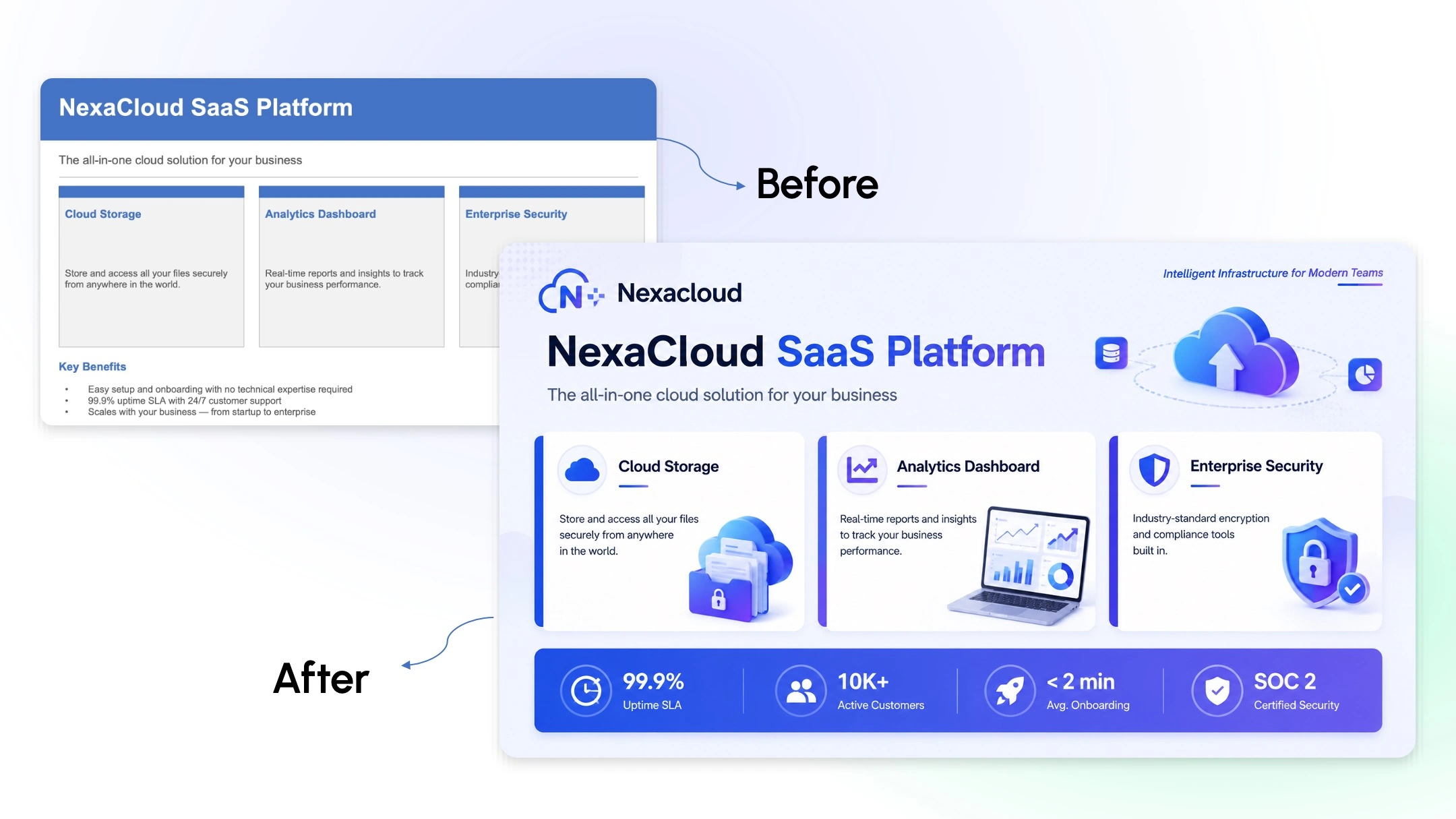

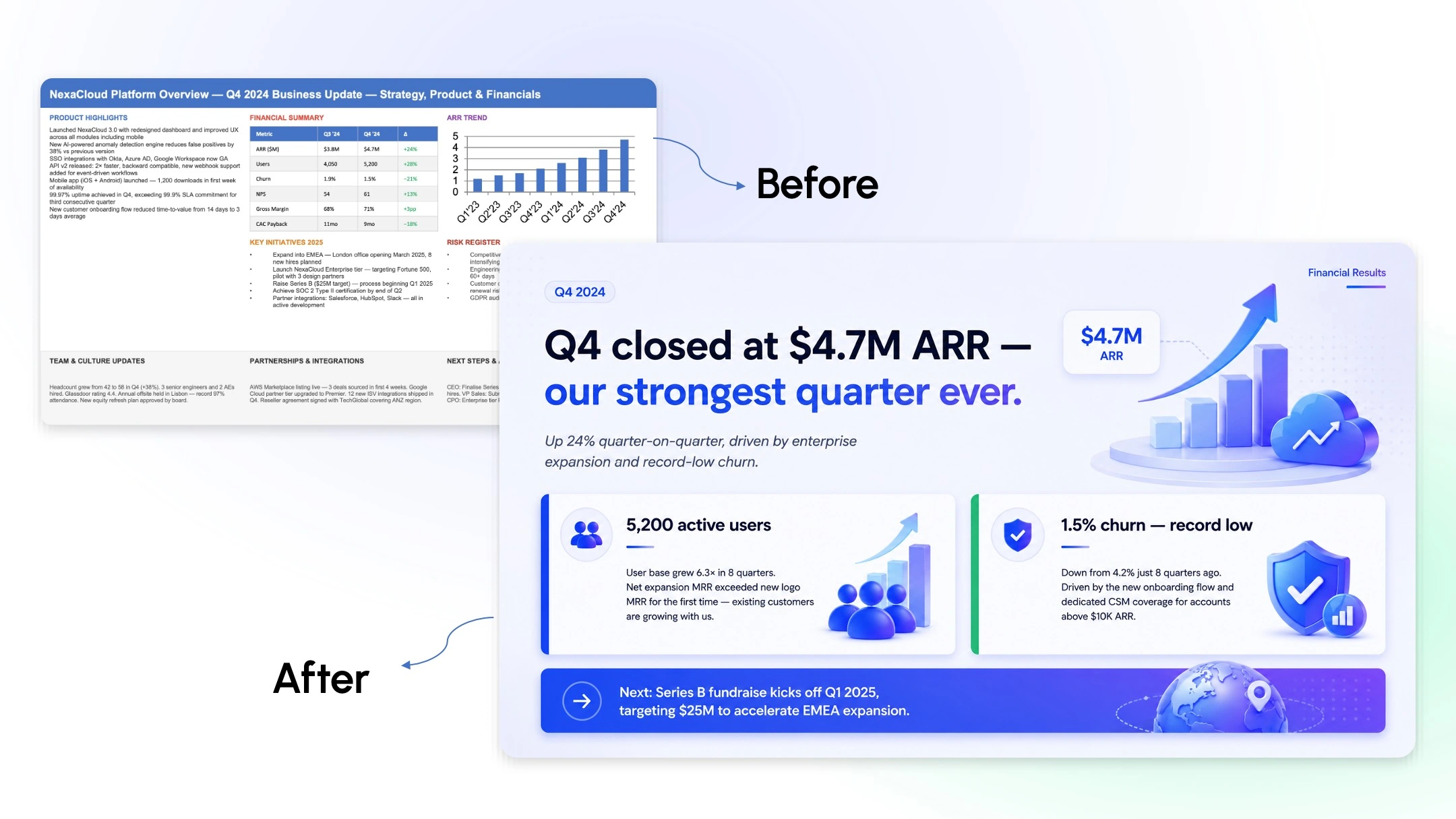
Enterprise decision makers intuitively judge the quality of the product being sold and organisational maturity based on the presentation design quality of the material they receive. And not a single slide will be looked at until this judgment has been made. If a business presentation design lacks organisation and style, enterprise clients will conclude that the company presenting it lacks organisation. That is the point of having great corporate presentation design ideas for tech companies. A chaotic presentation design indicates poor thinking.
In enterprise sales, your deck is most likely to be evaluated when you aren't there, as custom slides are read 68% more than generic ones. The CEO will open the deck alone. The CTO will analyse it after hours. An external consultant will forward it. It can either make the case in that room or fail. And it must do so in those scenarios.
HPE India MD had to communicate a complex strategic vision encompassing AI infrastructure, expanding to clouds, sustainability, and cultural change to unite national leaders and develop their joint enterprise IT strategy.
We delivered 25+ slides in just 1 day using our 5D Methodology:
Transformed dense IT strategy into an engaging leadership tool that:
An enterprise strategy can only succeed if it's easy for every stakeholder to comprehend, SaaS presentation PPT without explanation. That’s what made this HPE MD Vision Deck effective. And that’s the standard we build every enterprise presentation for.
If your leadership deck needs that same level of clarity and alignment, we can help you get there.
The most structurally flawed approach in enterprise presentations is designing one deck for every conversation. The CTO and CFO have entirely different questions in mind. The IT Director and Head of Procurement judge value differently. A presentation that tries to address all of their concerns will leave them all disappointed with the same content.
The solution to that problem is creating a deck in a modular format, in which the core narrative does not change. Still, stakeholder-specific slides can be added to create the necessary focus with an approach frequently used in SaaS product launch presentation services.
Creating this much stakeholder intelligence in your presentation is not an additional task. That is your actual task. Companies that manage to pull off this trick successfully go through their deal cycles faster and win many more deals because potential customers do not respond with "we need more time to evaluate" to this level of specificity.
Tech companies fall victim to a particular presentation pitfall: they try to demonstrate their expertise by putting as much complexity as possible into the deck. Architecture diagrams, interface screenshots, and complex workflows are everywhere, with thinking that this will somehow showcase their depth. But corporate presentation technology is all about creating clarity, not showcasing complexity. To a tech-savvy buyer, yes. To anyone else, no.
According to INK PPT, the proper corporate presentation for technology should follow these four guidelines:
There will come a time in every business deal where your presentation is reviewed by the buyer’s team without you there. It is the most crucial phase of the sales process – more critical than your demo or your relationship.
When businesses and software-as-a-service companies put money into strategic presentation design, they close deals faster and suffer fewer losses due to silence. The difference between the best product and the best-selling product is typically a failure in communication rather than a lack of capability.
That is the issue that INK PPT set out to tackle. Companies like Google, Deloitte, Diageo, and Salesforce have chosen us. We help enterprise teams create presentations that are designed to succeed, and not merely to look good. Our process begins with stakeholder research and finishes with a deck that can stand up on its own, regardless of whether it was ever shown in a room.
If your presentation is being assessed without you there, then the only thing left to ask yourself is whether it is aiding or hindering your deal.
Co-founder of INKPPT, I specialize in transforming complex ideas into refined, visually striking presentations. With a deep belief in the power of storytelling and design, I help brands communicate with clarity, purpose, and impact. Every slide is crafted to inform, inspire, and leave a lasting impression.

About the Author




Consult with our Business Advisor


